The 12 Principles of Animation
Animation is more than movement — it is a visual language that blends art, timing, character, and emotion. Whether it’s a simple walk cycle or a high-energy action scene, everything begins with the timeless 12 Principles of Animation. These Principles originally developed by the legendary Disney animators Ollie Johnston and Frank Thomas, continue to shape the global animation industry.
Let’s dive deeper into each principle:
- 1. Squash & Stretch
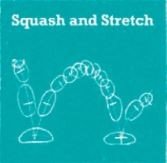
Squash and Stretch is often called the heartbeat of animation because it adds life, energy, and believability to every movement. It shows how flexible an object or character is and helps the viewer understand its weight and physical behavior.
In character animation, squash and stretch becomes even more powerful. It’s used subtly in facial expressions—like cheeks stretching when laughing—or in body movements, such as a character leaning, jumping, or reacting with surprise. These small shape changes add personality, emotion, and rhythm, making characters feel truly alive rather than flat or mechanical.
- 2. Anticipation
Anticipation is the invisible cue that prepares the audience for what is about to happen. It’s the small setup movement that makes the main action feel believable, clear, and emotionally impactful.
Similarly, before throwing a ball, a character pulls their hand back, rotates their shoulder, or adjusts their stance. These subtle movements create tension, direction, and clarity.
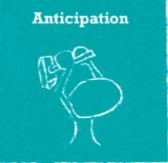
In short, anticipation is the bridge between thought and action—showing the audience why a character moves, not just how they move.
- 3. Staging
- 4. Straight Ahead Action vs. Pose-to-Pose
- Straight Ahead Action:
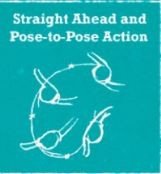
In this technique, the animator draws each frame in sequence from beginning to end. This approach creates movement that feels raw, energetic, and highly fluid. It’s ideal for scenes with natural chaos or continuous motion—like fire flickering, water splashing, hair blowing in the wind, or a character tumbling unpredictably. Since the action is built moment by moment, it often leads to dynamic and organic results.
- Pose-to-Pose:
This method begins with carefully planned key poses—strong, clear positions that capture the main beats of the action. Once these foundation poses are set, the animator fills in the in-between frames to complete the motion. This approach gives much more control over timing, storytelling, and character performance. It ensures the movement stays
- 5. Follow-Through & Overlapping Action
- Follow-Through refers to what happens after the main action ends. When a character suddenly stops running, their hair may continue swinging forward, their clothes may flap, or their arms might sway a moment longer. These lingering movements give the scene a sense of natural momentum, showing that actions don’t freeze instantly in the real world.
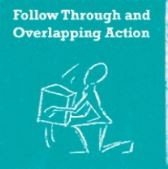
- Overlapping Action focuses on how different parts of the body move at slightly different rates. For example, when a character turns sharply, their head might move first, followed by their shoulders, torso, and finally their arms. This cascading motion creates a rhythm and flow that feels alive and believable
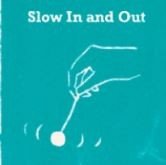
- 6. Slow In & Slow Out
- 7. Arcs
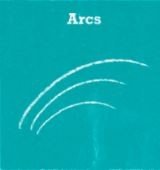
Imagine a hand waving. It doesn’t move stiffly from point A to point B — instead, it sweeps through a soft, curved motion that feels fluid and expressive. A bird in flight also glides in graceful arcs, its wings rising and falling in smooth patterns that create a sense of harmony and rhythm.When animators follow these curved paths, the motion appears more lifelike, appealing, and believable. But when arcs are ignored and movements are drawn in straight lines, characters look stiff, robotic, and unnatural.
- 8. Secondary Action
- 9. Timing
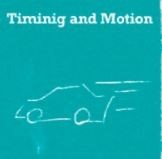
Timing also controls weight. A heavy object takes longer to lift, drops with force, and settles slowly, whereas a light object moves quickly and easily. By adjusting the spacing and number of frames, animators can show whether something feels soft or solid, heavy or delicate.
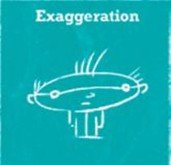
- 10. Exaggeration
Exaggeration can be applied to poses, movements, expressions, or even timing. A jump can be higher, a laugh bigger, a reaction quicker. These pushes and stretches make the scene more dynamic and expressive.Even realistic animation benefits from a touch of exaggeration. A slightly more pronounced gesture or a subtly enhanced facial reaction makes the performance easier to read and more engaging without losing believability.
- 11. Solid Drawing
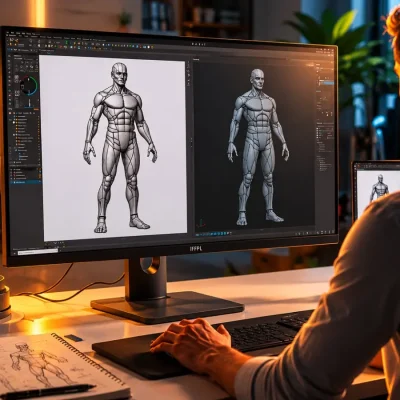
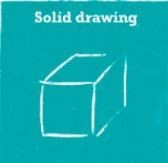
Imagine turning a character around in your mind. Solid drawing ensures they look consistent from every angle: their arms have proper volume, their posture has balance, and their movements respect the rules of physics and anatomy. Even exaggerated or stylized characters need a strong underlying structure to move believably. It’s not just about drawing well; it’s about giving form and depth to imagination. Solid drawing helps the audience feel that the character has bones, muscles, and weight — even if they’re made of rubber, metal, or pure fantasy.
- 12. Appeal
This principle also focuses on avoiding unnecessary complexity. Simple, well-defined shapes tend to be more memorable—and easier for audiences to connect with—than overly detailed designs. Think of iconic characters in animation: their silhouettes alone are recognizable.

When a character has true appeal, the audience wants to watch them — whether they’re a lovable hero, a mischievous sidekick, or a villain with undeniable charisma. It’s the secret ingredient that transforms a good character into an unforgettable one.
Even with modern 3D and digital tools, the 12 Principles remain universal. Whether you’re working in 2D animation, 3D animation, motion graphics, stop-motion, or even game design, these principles help create better storytelling and more believable actions. Mastering them transforms simple motion into emotion — and that’s the true magic of animation.
Visit Cosmos Creative Academy and start your creative journey today.
Live your passion……..shape your future……and become A Professional Animator.”