After 12th, Which Animation Course Should You Pick? A Complete Guide for Indian Students So you’ve just finished your Class 12 boards. Everyone around you is talking about engineering, medicine, or commerce — but your heart keeps pulling you toward something different. Maybe it’s the way you lose hours sketching characters. Maybe it’s the VFX in the last film that made your jaw drop. Maybe you’ve been building game levels in your spare time since Class 9. If that sounds like you, a career in animation and creative media might not just be a passion — it might be your smartest professional move. But here’s the problem: the choices are overwhelming. Degree or diploma? 2D or 3D? Animation or VFX or gaming? And what will actually get you a job? This guide breaks it all down — clearly, honestly, and with your future in mind. First, Understand What the Industry Actually Looks Like India’s Animation, Visual Effects, Gaming & Comics (AVGC) sector is no longer a side industry. It is a booming, government-backed, globally significant space. India’s AVGC industry is projected to cross ₹40,000 crore by 2027. OTT platforms like Netflix, Amazon Prime, and Disney+ Hotstar are actively commissioning Indian animated content. Indian gaming companies raised over $900 million in funding in recent years. Studios in Mumbai, Pune, Hyderabad, and Bengaluru are hiring — and struggling to find enough skilled professionals. The talent gap is real. Which means if you train well, the opportunities are genuinely waiting. The Main Career Paths After 12th Before choosing a course, understand the four major directions in the creative media world: Animation (2D & 3D) Creating characters, environments, and storytelling through motion. Think Motu Patlu, Chhota Bheem, Bollywood VFX sequences, and international co-productions. Roles include character animator, rigging artist, layout artist, and motion designer. Visual Effects (VFX) The magic behind film and web series — compositing, green screen work, particle effects, destruction simulations. VFX artists work on everything from regional films to Hollywood productions outsourced to Indian studios. Game Design & Development Designing the worlds, characters, mechanics, and stories inside video games. India’s gaming industry is rapidly growing, and demand for skilled game designers and developers is outpacing supply. Graphic Design & Motion Graphics Brand identity, social media content, advertising, UI/UX design, and motion graphics for digital media. This path has the widest freelance and employment opportunities across all industries — not just entertainment. Degree vs. Diploma vs. Certificate: What’s the Difference? This is where most students get confused. Here’s a simple breakdown: Type Duration Best For Industry Value UGC-Approved Degree 3–4 years Students wanting academic + professional credentials Highest — opens doors to senior roles and international opportunities Career/Diploma Course 1–2 years Students who want to enter the workforce quickly Strong, especially with a good portfolio Specialised/Certificate Course 3–6 months Students upskilling in a specific area Good as an add-on; not enough as a standalone Our honest advice: If you’re starting fresh after Class 12 and can commit the time, a UGC-approved degree combined with industry certifications gives you the best of both worlds — academic credibility and practical skills. Which Course Matches Your Personality? Not sure which direction to go? Here’s a quick personality-to-path match: You’re a storyteller and love drawing characters → 2D Animation or 3D Character Animation You’re obsessed with films and love the idea of creating impossible visuals → VFX / Compositing You play games for hours and think about how they could be better → Game Design & Development You love typography, branding, and making things look beautiful → Graphic Design & Motion Graphics You want to do everything and keep your options open → A broad animation degree that covers multiple disciplines What to Look for in an Animation Institute Choosing the right institute matters as much as choosing the right course. Here’s what to evaluate: Industry-Experienced Faculty Are the teachers working professionals or just academics? The best mentors bring real studio experience into the classroom. Hands-On Training Does the course include live projects, not just theory? Your portfolio — not your marksheet — will get you hired. Software and Infrastructure Industry-standard tools like Autodesk Maya, Adobe Creative Suite, Unreal Engine, and Blender should be available and taught. Placement Record Ask to see actual placement data — companies, roles, and salaries. A reputed institute will be transparent about this. Industry Connections Do they have studio tie-ups? Do students get exposure to real production environments? Certifications Industry-recognised certifications alongside a degree significantly boost your employability. Common Mistakes Students Make When Choosing Mistake 1: Choosing a course based on what’s “safe” If you take up a course you’re not passionate about, your output will reflect it. The animation industry rewards those who love what they do. Mistake 2: Ignoring portfolio building Your portfolio is your resume in creative fields. Start building it from Day 1. Mistake 3: Picking an institute solely on fees The cheapest option is rarely the best investment. Look at outcomes, not just cost. Mistake 4: Thinking it’s too competitive Yes, the field is growing — but so is demand. Skilled, hardworking graduates find jobs. The competition is for mediocrity, not excellence. Mistake 5: Skipping the campus visit Always visit before you enrol. Talk to current students. See the labs. Ask the hard questions. A Word to Parents We understand the concern. Animation and gaming can feel like uncertain career paths compared to engineering or medicine. But here’s what the numbers say: India’s AVGC sector employs hundreds of thousands of professionals and is growing at 20%+ annually. Your child’s passion for drawing, storytelling, or gaming is not a hobby to be tolerated — it is a skill set the industry is desperate for. The right training, at the right institute, leads to real, well-paying, creative careers. Cosmos Creative Academy’s alumni work at top studios, animation houses, game companies, and advertising agencies across India. Why Students in Pune-Pimpri-Chinchwad Have a Head Start If you’re based in the Pune metropolitan area, you’re already in one of India’s
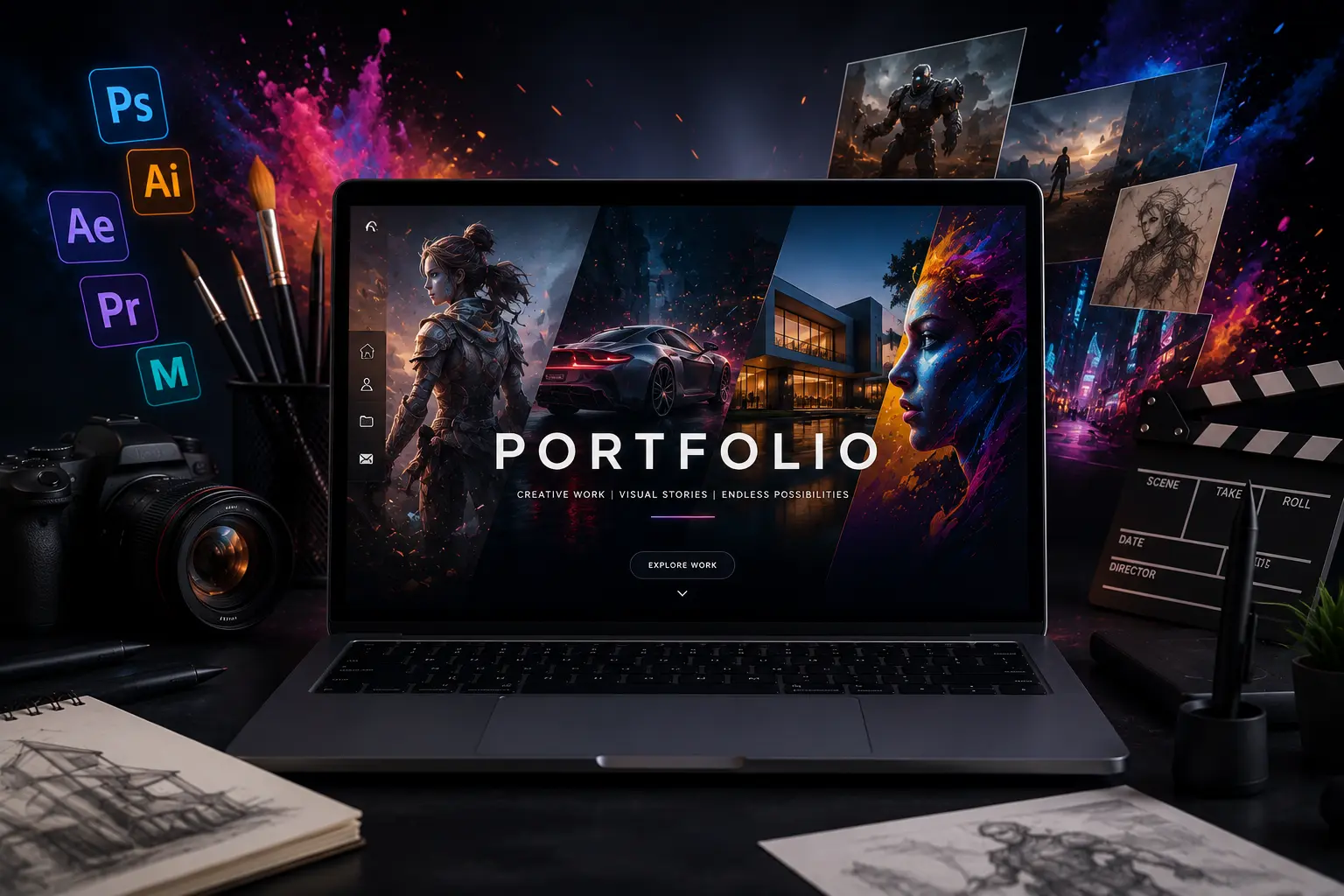
Building a Strong Portfolio: The Key to Success in Creative Fields
Building a Strong Portfolio: The Key to Success in Creative Fields In the creative industry, your portfolio is your most powerful career tool. More than your degree, more than your resume — your portfolio is what studios, agencies, and clients look at first. Whether you are pursuing Graphic Design, Animation, VFX, Video Editing, Game Design, or AI-based creative work, a strong portfolio can open doors that talent alone cannot. This guide walks you through exactly how to build a creative portfolio that stands out — with actionable tips for every creative discipline. Why Your Portfolio Matters More Than You Think Talent gets you started. A portfolio gets you hired. Industry professionals are busy. When they review candidates, they are not reading long resumes — they are looking at work. Your portfolio gives them instant proof of what you can create, how you think, and whether you are ready for the job. At Cosmos Creative Academy, we have seen this firsthand: students with strong, well-presented portfolios consistently land jobs, freelance projects, and internships faster than those who rely on certificates alone. Degrees and certifications matter — but a powerful portfolio creates trust in your actual abilities. How Many Projects Do You Need? Here is a common misconception: more projects equals a better portfolio. The truth? 5 to 10 high-quality projects will always outperform 30 mediocre ones. Employers are looking for depth, creativity, and execution — not volume. Every piece in your portfolio should be something you are proud to present in an interview. Be selective. Be intentional. Show your best. What to Include Based on Your Discipline Your portfolio should reflect the specific field you are targeting. Here is what to include for each creative path: Graphic Design Poster and print design Social media creatives and ad campaigns Typography and layout work Packaging design UI/UX design mockups 2D & 3D Animation Character animation and walk cycles Lip sync and expression work Motion graphics and title sequences 3D modelling, texturing, and rendering samples Environment and scene builds VFX Compositing and green screen projects CGI integration into live footage Particle effects and destruction simulations Camera tracking and match-moving work Before-and-after breakdowns (these impress clients enormously) Video Editing Cinematic edits and short films Promotional and brand videos Reels with clean transitions and pacing Storytelling projects that show narrative sense Game Design Level designs and environment screenshots Character concept art and development sheets Gameplay mechanics documentation or demo clips Interactive experiences or playable demos The One Mistake That Will Hurt Your Portfolio Copying existing designs or trends without adding your own ideas. Inspiration is healthy. Imitation as a final product is not. Employers want to see how you solve problems — your use of colour, composition, storytelling, and creative instinct. Every project should reflect original thinking, not just technical execution of someone else’s idea. Ask yourself before adding any piece: Does this show how I think, or just what I can replicate? How to Present Your Portfolio Professionally Building the work is only half the job. How you present it matters just as much. Organise it clearly. Group work by category or project type. Make it easy to navigate. Use high-quality visuals. Low-resolution screenshots or compressed images immediately reduce the professional impression of your work. Add project descriptions. For each piece, briefly explain the objective, tools used, and your creative process. This shows that you think — not just execute. Keep it clean. A visually cluttered portfolio competes with your work for attention. Let the work breathe. Start with your strongest piece. Viewers form opinions quickly. Open with impact. Build Your Online Portfolio — It Is No Longer Optional In today’s hiring landscape, an online portfolio is essential. Here are the best platforms for creative professionals in India: Behance — Industry standard for designers, animators, and VFX artists ArtStation — Preferred platform for 3D artists, game designers, and concept artists LinkedIn — Professional visibility and direct recruiter access Instagram & YouTube — Increasingly powerful for reels, motion work, and creative process content Personal website — Gives you full control over your brand and presentation Consistently posting work online does more than build a portfolio — it builds confidence, visibility, and a professional network over time. Update It Regularly — Your Portfolio Should Grow With You A portfolio is never truly finished. As your skills improve, your older work will start to look weak by comparison. Replace it. Set a habit: every time you complete a strong new project, review your portfolio and ask whether any older piece should be swapped out. A regularly updated portfolio signals growth, dedication, and an active creative mind — all things employers want to see. When Should You Start Building Your Portfolio? Right now. Not after you finish your course. Many students make the mistake of waiting until graduation to begin compiling their work. By that point, they are scrambling to put together pieces under pressure. The smarter approach is to treat every assignment, practice project, and creative experiment as a potential portfolio piece from Day 1. Start early. Keep your best work. Refine it as you grow. What a Strong Portfolio Can Do For Your Career A well-built portfolio does not just help you get a job — it expands what is possible: Employment at studios, agencies, and production houses Freelancing clients who find you online and commission work directly Internships at top creative companies while still studying International opportunities — many global studios hire Indian talent remotely Collaborations with other creatives on passion projects and independent productions In creative careers, your work speaks louder than any certificate. Invest the time to build it well. Build Your Portfolio the Right Way — With the Right Training At Cosmos Creative Academy, Chinchwad, portfolio building is not an afterthought — it is built into everything we do. Our students work on live projects, real client assignments, and industry-standard software from their very first term. By the time they graduate, they leave with a portfolio that is ready to compete in