
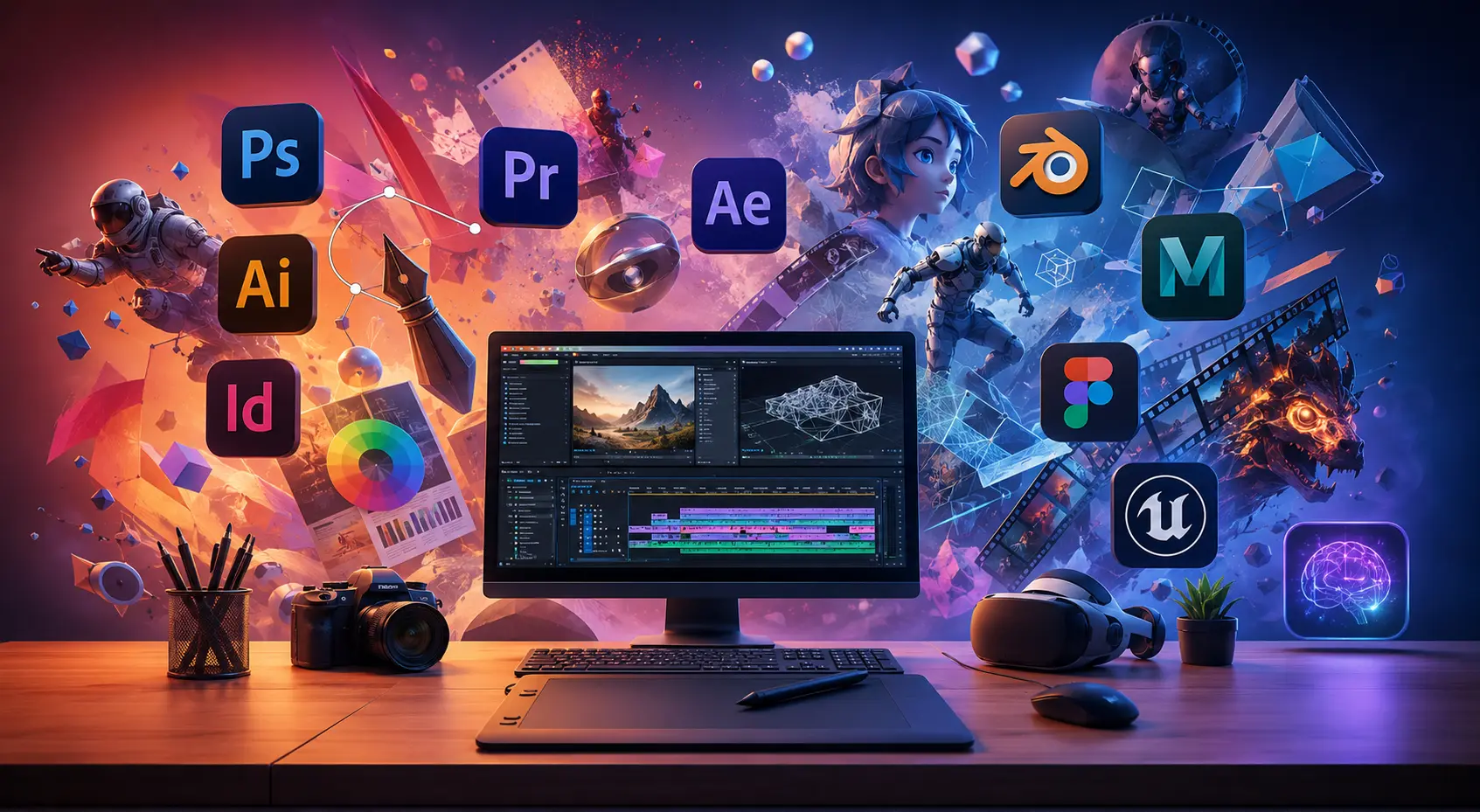
Essential Software Every Design & Animation Student Must Learn in 2026 The world of design and animation is more exciting today than ever before. Every day, we see stunning advertisements, engaging social media content, animated films, video games, websites, and AI-generated artwork that inspire millions of people around the globe. Behind all this creativity are talented designers and artists who know how to use the right tools.If you’re a student dreaming of a career in graphic design, animation, video editing, VFX, gaming, or UI/UX design, learning professional software is one of the smartest investments you can make in your future.The good news is that you don’t need a huge studio or expensive equipment to get started. With a computer, creativity, and the right software, you can build amazing projects, develop your portfolio, and prepare yourself for a successful career in the creative industry. Let’s explore the essential software every design and animation student should learn in 2026. Adobe Photoshop: Where Every Creative Journey Begins Ask almost any designer which software they started with, and chances are they’ll say Photoshop.Adobe Photoshop has been the foundation of digital design for many years, and it continues to be one of the most important tools in the creative industry. Whether you’re editing photos, creating social media posts, designing posters, or producing digital artwork, Photoshop gives you the freedom to bring your ideas to life.For students, Photoshop is much more than an editing tool. It’s where you learn important design concepts such as layers, color correction, image manipulation, and visual composition. These skills become the building blocks for almost every creative career.Even with the rise of AI-powered design tools, Photoshop remains an essential skill for anyone serious about becoming a professional designer. Adobe Illustrator: Turning Creativity into Strong Brands Have you ever wondered how famous logos stay perfectly sharp on everything from business cards to giant billboards?The answer lies in vector graphics, and Adobe Illustrator is the industry leader in this space.Illustrator is widely used for logo design, branding, packaging, illustrations, typography, and icon creation. It allows designers to create artwork that can be resized without losing quality.For students interested in branding and visual identity design, Illustrator is an invaluable tool that can help transform simple ideas into professional-looking designs. Adobe InDesign: The Art of Beautiful Layouts Great design isn’t only about creating attractive graphics—it’s also about presenting information clearly and effectively.Adobe InDesign is the preferred software for designing magazines, brochures, books, catalogs, reports, and other publications. It helps designers combine text, images, and graphics into clean, professional layouts.While many students focus only on Photoshop and Illustrator, learning InDesign can open additional career opportunities in publishing, print media, and corporate communications. Adobe Premiere Pro: The Storytelling Tool of the Digital Age Video content has become one of the most powerful forms of communication in today’s world.From YouTube videos and Instagram reels to corporate advertisements and documentaries, video is everywhere. Adobe Premiere Pro helps creators transform raw footage into engaging visual stories.Learning Premiere Pro allows students to develop valuable skills in video editing, color correction, audio enhancement, and content production. As businesses continue investing heavily in video marketing, skilled editors are becoming increasingly valuable. Adobe After Effects: Bringing Motion to Creativity Sometimes a static image isn’t enough. Motion captures attention, creates excitement, and tells stories in ways that still images cannot.Adobe After Effects is the industry-standard software for motion graphics, visual effects, and animation. Whether it’s an animated logo, an explainer video, or cinematic effects in a film, After Effects helps designers create content that moves and engages audiences.For students who love creativity and storytelling, learning motion graphics can significantly expand career opportunities. Blender: The Future of 3D Design The demand for 3D content is growing rapidly across industries such as gaming, advertising, architecture, animation, and product design.Blender has become one of the most popular 3D software applications because it offers professional-quality tools completely free of cost.Students can use Blender to create 3D models, animations, visual effects, product renders, and digital sculptures. As 3D content becomes increasingly important, Blender offers an excellent opportunity to develop future-ready skills without expensive software subscriptions. Autodesk Maya: The Professional Animator’s Choice When you watch animated films or play modern video games, there’s a good chance Autodesk Maya played a role in bringing those characters and worlds to life.Maya is widely used by professional studios for character animation, rigging, simulations, and advanced 3D workflows. It remains one of the most respected tools in the animation and gaming industries.For students aspiring to work in professional studios, Maya continues to be a highly valuable skill that employers recognize and respect. Figma: Designing Better Digital Experiences Today’s businesses don’t just need attractive websites and apps—they need experiences that users enjoy and understand.Figma has quickly become one of the most popular tools for UI and UX design because it allows teams to collaborate in real time while creating interfaces, prototypes, and design systems.As digital products continue to dominate our daily lives, UI/UX designers are among the most in-demand creative professionals. Learning Figma can open doors to exciting opportunities in product design and user experience. Unreal Engine: Building the Worlds of Tomorrow Unreal Engine is no longer just a game development tool. Today it’s being used in animation, architecture, virtual production, filmmaking, and immersive experiences.Its real-time rendering technology allows creators to build incredibly realistic environments and interactive experiences faster than ever before.As industries increasingly adopt virtual production and real-time workflows, Unreal Engine is becoming one of the most valuable tools for future-focused creators. AI Tools: Your Creative Partner, Not Your Competitor Artificial Intelligence is transforming the creative industry, but it’s not replacing creativity—it’s enhancing it.Tools like Adobe Firefly, Midjourney, Runway, and ChatGPT are helping designers generate ideas, speed up workflows, create concepts, and automate repetitive tasks.The designers who succeed in the future will be those who learn how to combine human creativity with AI-powered efficiency. Understanding prompt writing and AI-assisted design is quickly becoming an important skill for every creative professional. Building Your Learning Journey