
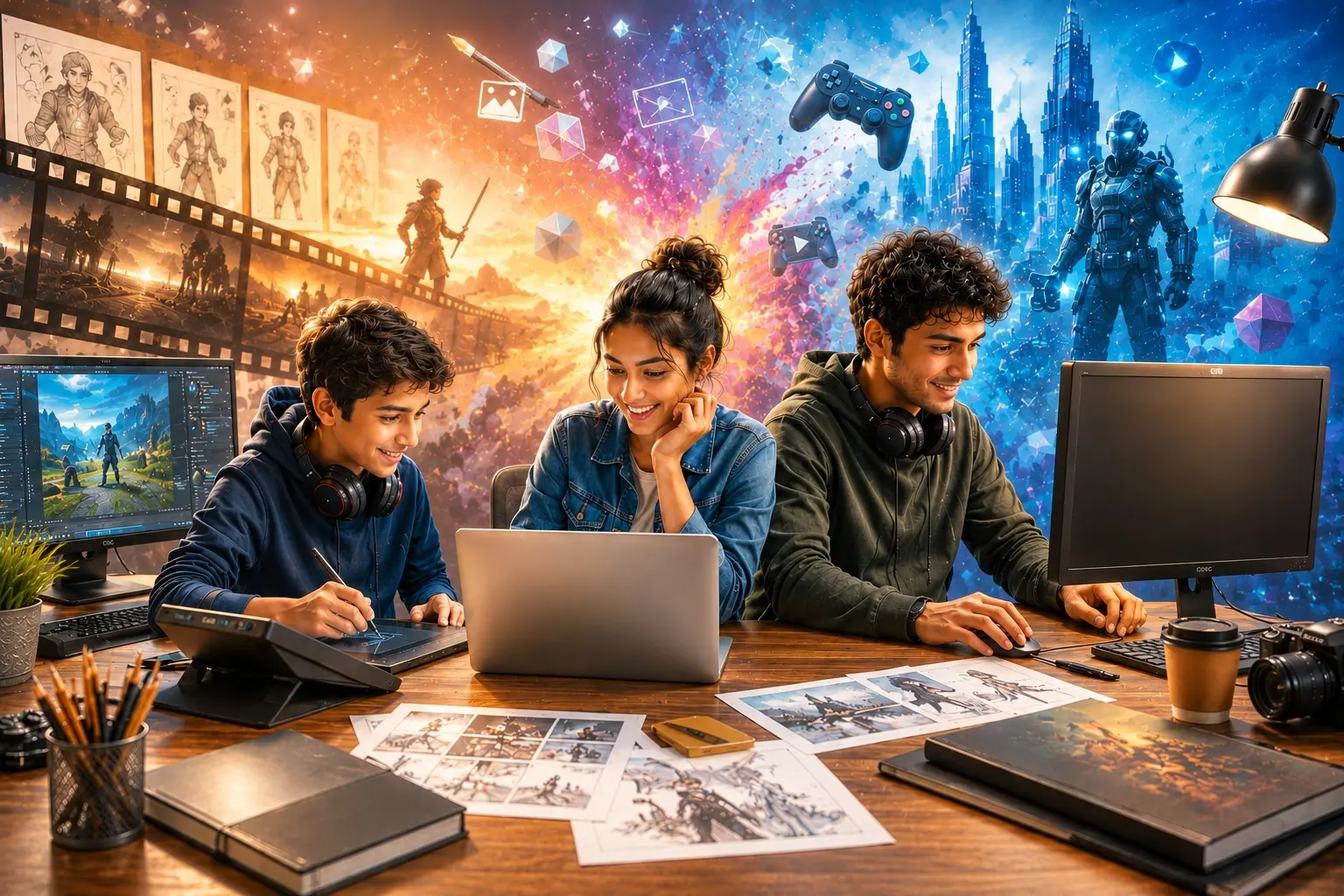
Does Age and Educational Background Matter For Learning Animation, Graphics, Video Editing VFX, and Gaming? Your Passion Matters More Than Your Age or Degree Many students and professionals often hesitate to pursue a career in animation, graphic design, VFX, video editing, or gaming because they believe they are either too old or lack the right educational background. Questions like “Can I learn animation after graduation?”, “Is graphic design only for Arts students?”, or “Can I switch from engineering or commerce to a creative career?” are very common. The good news is that the creative industry has evolved significantly, and today, success depends far more on your skills, creativity, and dedication than on your age or academic qualifications. Age Is Never a Barrier to Learning Creativity One of the biggest misconceptions is that animation and design are careers meant only for young students. In reality, creativity has no age limit. Many successful designers, video editors, and VFX artists have started their careers after completing college, changing professions, or even after spending years in completely different industries. Employers and clients rarely ask when you started learning—they are more interested in what you can create. If you have the enthusiasm to learn and the determination to improve, you can begin your creative journey at any stage of life. Educational Background Is Not the Deciding Factor Another common myth is that only students from an Arts background can succeed in creative fields. However, animation, graphics, VFX, and gaming welcome learners from every educational stream. Whether you have studied Science, Commerce, Arts, Engineering, Management, or any other discipline, you can build a successful career by learning the necessary software and practical skills. Modern training programs are designed to teach concepts from the basics, making them accessible even to complete beginners. You Don’t Need to Be an Excellent Artist Many aspiring students avoid creative courses because they think they must be exceptional at drawing. While sketching skills can certainly be useful for illustration or character design, they are not essential for many career paths in the industry. Graphic designers, video editors, motion graphics artists, VFX compositors, UI/UX designers, and 3D modelers often rely more on creativity, software proficiency, and visual thinking than on hand-drawing abilities. Today’s advanced tools make it possible to produce outstanding work without being a professional artist. What Truly Determines Success? The most successful professionals in the creative industry are not necessarily those with the highest qualifications but those who continuously learn and practice. Curiosity, creativity, patience, and consistency play a much bigger role than age or degrees. The ability to observe details, solve visual problems, accept feedback, and stay updated with evolving technologies helps individuals grow faster in their careers. Every project completed and every mistake corrected becomes a stepping stone toward mastery. Starting Early Can Be Beneficial, But It’s Never Too Late Students who begin learning after their 10th or 12th standard often have the advantage of building skills and portfolios at an early age. They can gain practical experience through internships and freelance projects while continuing their education. However, this does not mean that others have missed their opportunity. College students, graduates, and even working professionals can successfully enter the creative industry by dedicating time to learning and practicing. The timing of your start is less important than your commitment to continuous improvement. Combining Creative Skills with Higher Education Many college students today choose to learn animation or graphic design alongside their degree programs. A Commerce student may become a graphic designer, an Engineering graduate may pursue UI/UX design, or a Business student may specialize in video editing and motion graphics. This combination of academic knowledge and creative expertise often makes candidates more versatile and attractive to employers. It also provides additional career opportunities beyond traditional job roles. Career Switching Is More Common Than Ever The rapid growth of digital media has encouraged many professionals to change careers and move into creative industries. People working in IT, banking, sales, education, marketing, and administration have successfully transitioned into graphic design, VFX, animation, and video editing. With structured training, dedication, and practical experience, career changers can establish themselves in these fields and enjoy exciting opportunities that align with their interests and creativity. Your Portfolio Speaks Louder Than Your Marks Unlike many conventional professions where academic scores dominate hiring decisions, the creative industry focuses heavily on portfolios. Employers want to see your ability to solve problems, communicate visually, and create engaging content. A strong portfolio showcasing original projects often has a greater impact than your educational qualifications or percentage marks. It demonstrates your creativity, technical knowledge, and commitment to the craft, making it one of the most valuable assets in your career. The Rise of AI Makes Learning Even More Exciting Artificial Intelligence is transforming the world of design and animation by automating repetitive tasks and accelerating workflows. AI-powered tools can generate images, assist with editing, remove backgrounds, and enhance productivity. However, they cannot replace human imagination, storytelling, artistic judgment, or emotional expression. Instead, AI has become a powerful assistant that allows creative professionals to focus more on innovation and originality. Those who combine traditional design skills with AI knowledge will have a significant advantage in the future job market. Endless Career Opportunities Await The creative industry offers a wide range of career paths regardless of your age or educational background. Skilled professionals can work as graphic designers, motion graphics artists, video editors, VFX artists, 2D and 3D animators, game artists, UI/UX designers, brand designers, content creators, freelancers, or even entrepreneurs. Opportunities exist across advertising agencies, film studios, gaming companies, digital marketing firms, educational platforms, television production houses, and multinational corporations. The demand for creative talent continues to grow as businesses increasingly rely on visual communication.When it comes to learning animation, graphics, VFX, video editing, or gaming, age and educational background are not the deciding factors—your passion, dedication, and willingness to learn are. The creative industry welcomes people from all walks of life because it values practical skills, innovative thinking, and strong