
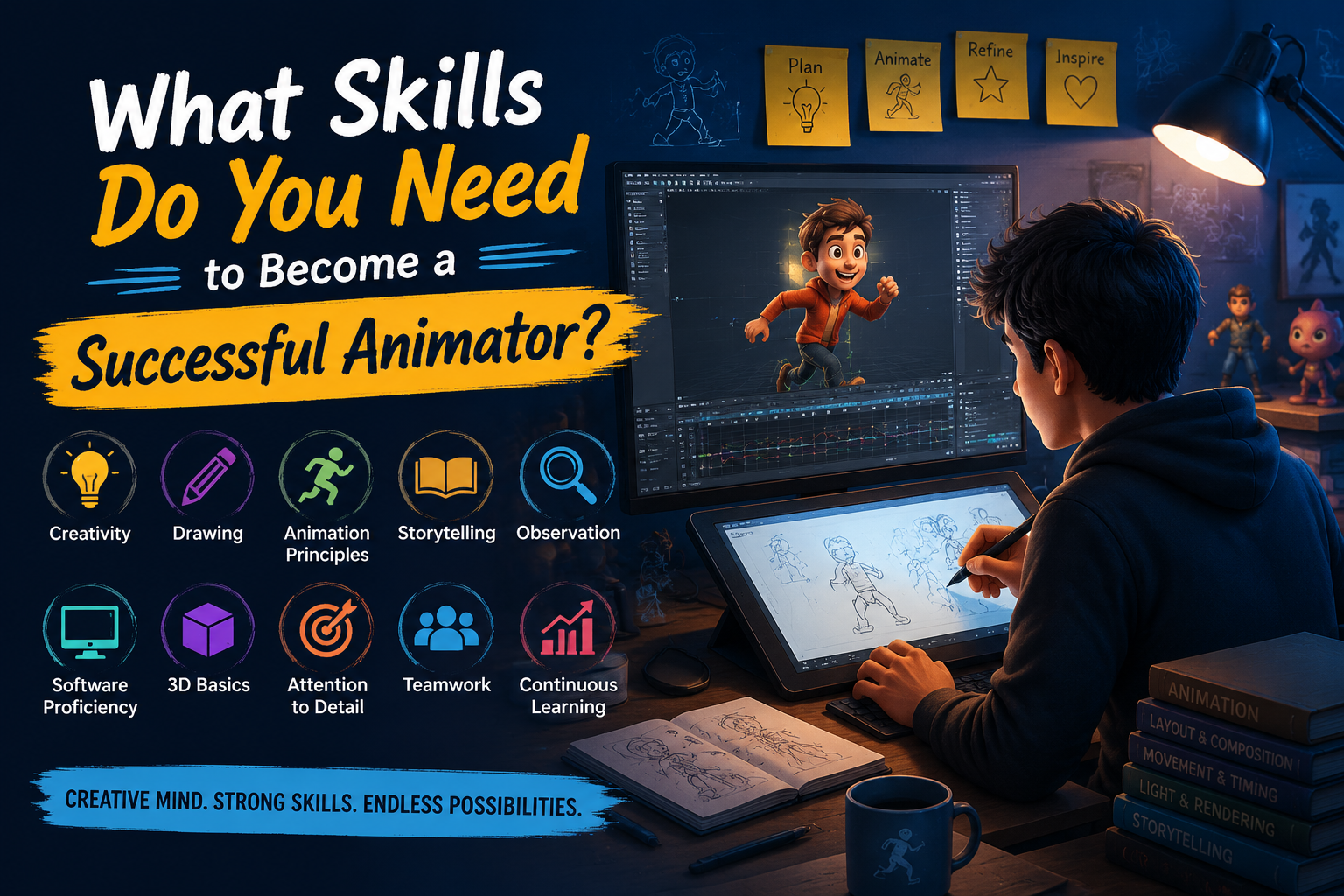
What Skills Do You Need to Become a Successful Animator? Animation is much more than making characters move on a screen—it’s about bringing stories, emotions, and imagination to life. Every animated movie, video game, advertisement, or web series you enjoy is the result of countless hours of creativity, technical expertise, and dedication. If you’ve ever dreamed of becoming an animator, you might be wondering, “What skills do I really need?” The good news is that becoming a successful animator isn’t about being born with extraordinary talent. It’s about developing the right mix of creative thinking, technical knowledge, and a willingness to keep learning. Let’s explore the essential skills every aspiring animator should build. Creativity and Imagination Every amazing animation begins with a simple idea. Creativity allows animators to imagine unique characters, exciting worlds, and memorable stories that audiences love. Whether you’re designing a funny cartoon character or creating an emotional movie scene, your imagination is your greatest strength. Great animators constantly ask themselves, “What if?” and use their creativity to transform ordinary ideas into extraordinary visuals. How to improve this skill: Observe people and nature. Watch animated films from different studios. Read books and comics. Keep a sketchbook for random ideas. Remember: Creativity grows the more you practice it. Strong Drawing and Sketching Skills You don’t have to be a professional artist to become an animator, but basic drawing skills make your journey much easier. Drawing helps you understand how characters are built, how they move, and how they express emotions. Even in 3D animation, many professionals begin by sketching ideas before moving to software. Focus on learning: Human anatomy Perspective Gesture drawing Facial expressions Composition These fundamentals help you create animations that feel natural and believable. Understanding the Principles of Animation The 12 Principles of Animation are considered the foundation of professional animation. Originally developed by Disney animators, these principles make movements feel smooth, realistic, and engaging. Some of the most important principles include: Squash and Stretch Timing and Spacing Anticipation Follow Through Slow In & Slow Out Exaggeration Appeal Think of these principles as the grammar of animation. Once you understand them, your animations instantly become more polished and professional. Storytelling Ability Animation is ultimately about telling stories. No matter how impressive your visuals are, they won’t leave a lasting impact unless they connect emotionally with the audience. A good animator understands: Character development Emotional expression Visual storytelling Scene composition Audience engagement Every movement should help tell the story and make viewers feel something. Observation Skills One of the biggest secrets of great animators is that they are excellent observers. They carefully watch how people walk, run, laugh, talk, and react to different situations. They also observe animals, nature, and everyday life to understand realistic movement. Try observing: Body language Facial expressions Animal movement Gravity and physics Daily human activities The more you observe the real world, the more believable your animations become. Software Proficiency Creativity is important, but knowing the right tools is equally essential. Professional studios use industry-standard software to create high-quality animations, and becoming comfortable with these tools can significantly improve your career opportunities. Becoming proficient with these applications not only improves your technical skills but also prepares you to work efficiently in a professional production pipeline. Familiarity with industry-standard software enhances your productivity, enables seamless collaboration with other artists, and significantly increases your employability and career opportunities in the animation, VFX, gaming, and multimedia industries. Popular software includes: Autodesk Maya Blender Adobe Animate Toon Boom Harmony Cinema 4D Unreal Engine Adobe After Effects Learning multiple tools gives you the flexibility to work on different types of projects. Basic Knowledge of 3D Modeling and Rigging Animation doesn’t happen in isolation. It is part of a larger production pipeline. While your primary focus may be animation, having a basic understanding of 3D modeling, rigging, texturing, lighting, and rendering is essential for becoming a well-rounded 3D artist. Knowing how models are created, how characters are rigged for movement, how textures add realistic details, and how lighting and rendering bring scenes to life helps you create better animations and collaborate more effectively with other artists. This foundational knowledge also improves problem-solving skills, streamlines the production process, and prepares you to work confidently in professional animation and VFX studios. Patience and Attention to Detail Animation is a process that demands patience, precision, and persistence. Creating just a few seconds of high-quality animation can take several hours—or even days—to complete. Every frame contributes to the final result, and even the smallest adjustments can significantly improve the realism, timing, and overall quality of the animation. Successful animators are: Patient – They understand that great animation takes time and are willing to refine their work until it meets professional standards. Persistent – They don’t give up when a scene becomes challenging and continuously work to improve their skills. Detail-Oriented – They pay close attention to movement, timing, expressions, and subtle details that bring characters and scenes to life. Dedicated to Continuous Improvement – They welcome feedback, learn from mistakes, and keep practicing to achieve better results with every project. Communication and Teamwork Large animation projects involve many talented professionals working together. From concept development to the final rendered output, every stage of production depends on effective coordination between different departments. As an animator, you will regularly communicate with artists, technical experts, and project managers to ensure that every scene aligns with the project’s creative vision and production requirements. Animators often work closely with: Storyboard artists Character designers Modelers Rigging artists Lighting artists VFX artists Editors Sound designers Strong communication and teamwork are essential in every animation studio. The ability to share ideas clearly, provide and accept constructive feedback, solve production challenges collaboratively, and meet project deadlines ensures a smooth workflow and contributes to the successful completion of high-quality animation projects. Problem-Solving Skills Every animation project comes with challenges. Sometimes a character’s movement doesn’t feel natural, a scene lacks the right timing, or technical issues slow down the workflow. Instead of getting