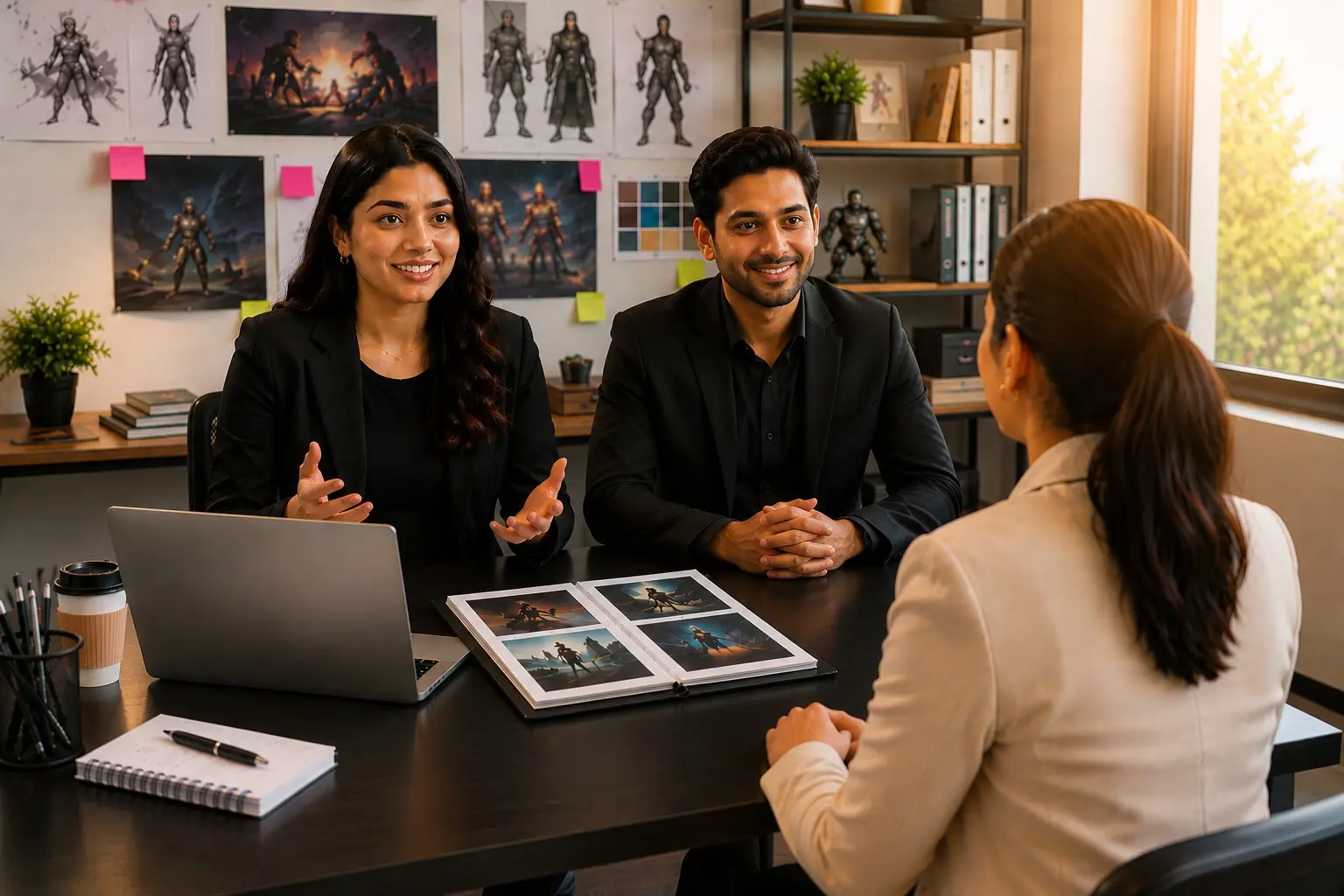
How to Prepare for Your First Creative Industry Job Interview
Getting your first interview call is an exciting moment. After spending months learning new software, building projects, and creating your portfolio, this is your chance to step into the professional world.
But it’s also completely normal to feel nervous. Questions like “Will they like my portfolio?”, “What if they ask something I don’t know?” or “Am I good enough?” cross almost every student’s mind before their first interview.
The good news is that creative companies don’t expect freshers to know everything. They understand you’re just starting your career. What they really look for is your creativity, willingness to learn, problem-solving ability, and passion for the field.
If you’re preparing for your first interview in Animation, Graphic Design, Video Editing, VFX, Motion Graphics, or Game Design, these practical tips will help you feel more confident and make a positive impression.
The good news is that creative companies don’t expect freshers to know everything. They understand you’re just starting your career. What they really look for is your creativity, willingness to learn, problem-solving ability, and passion for the field.
If you’re preparing for your first interview in Animation, Graphic Design, Video Editing, VFX, Motion Graphics, or Game Design, these practical tips will help you feel more confident and make a positive impression.
1. Let Your Portfolio Tell Your Story
In the creative industry, your portfolio is often more important than your resume. It gives interviewers a clear picture of your skills, creativity, and the way you think.
Instead of adding every project you’ve ever made, choose the ones you’re genuinely proud of. Even if they’re college assignments or personal projects, make sure they showcase your best work.
A strong portfolio may include:
- Graphic design projects
- Logo or branding concepts
- Animation showreels
- Video editing samples
- Motion graphics
- 3D models
- VFX breakdowns
- Personal creative experiments
Remember, ten impressive projects are always better than thirty average ones.
2. Learn About the Company Before You Walk In
One of the biggest mistakes students make is attending interviews without knowing anything about the company.
Spend just 20–30 minutes researching:
- What services they offer
- Their recent projects
- Their clients
- Their social media pages
- Their work style
When you understand the company, your answers become more relevant, and it shows that you’re genuinely interested in working there.
3. Refresh Your Software Skills
You don’t need to know every shortcut or advanced feature, but you should be comfortable using the software related to your field.
For example:
- Graphic Designers should revise Photoshop, Illustrator, and InDesign.
- Video Editors should be confident with Premiere Pro or DaVinci Resolve.
- Animation and VFX students should revise Maya, Blender, After Effects, or other tools they’ve learned.
- Game Design students should be familiar with Unity, Unreal Engine, or Blender.
Interviewers may simply ask how you created one of your projects, so be ready to explain your workflow.
4. Be Ready to Talk About Your Projects
Your interviewer will probably spend more time discussing your work than asking technical questions.
They may ask:
- Which project was your favourite?
- What challenges did you face?
- How did you solve them?
- Which software did you use?
- If you could improve the project today, what would you change?
There are no perfect answers. Just be honest and explain your creative process confidently.
5. Don't Ignore the Basics
Knowing software is important, but understanding design principles makes you a better creative professional.
Depending on your field, revise topics like:
- Colour theory
- Typography
- Composition
- Layout design
- Storytelling
- The 12 Principles of Animation
- Lighting and camera angles
- Visual hierarchy
Strong fundamentals help you solve creative problems much more effectively than simply knowing software tools.
6. Expect a Small Practical Test
Many studios prefer seeing your skills in action.
You might be asked to:
- Design a simple social media post
- Edit a short video
- Create a logo concept
- Animate a bouncing ball
- Remove an object from footage
- Create a quick UI layout
Don’t panic if this happens. Interviewers usually want to understand your thinking process, not whether you create a masterpiece in thirty minutes.
7. Communicate with Confidence
Creative professionals work with clients, teammates, and managers every day. That’s why communication matters.
During the interview:
- Speak clearly.
- Listen carefully before answering.
- Be polite.
- Maintain eye contact.
- Don’t rush your answers.
You don’t need to speak perfect English. Confidence, clarity, and honesty leave a much stronger impression.
8. It's Okay to Say "I Don't Know"
Many students think they should answer every question, even when they don’t know the correct answer.
Instead, it’s perfectly acceptable to say:
“I haven’t worked on that yet, but I’m interested in learning it.”
Interviewers appreciate honesty much more than guessing or pretending.
9. Dress Neatly and Be Punctual
Creative companies often have a relaxed work culture, but professionalism still matters.
Wear clean, comfortable clothes, arrive a little early, and carry yourself confidently.
Simple things like being on time and looking well-prepared create a positive first impression.
10. Carry Everything You Need
Before leaving for your interview, double-check that you have:
- Updated resume
- Portfolio or showreel
- Laptop (if requested)
- Charger
- Pen and notebook
- Any required certificates or documents
Being organised reflects your professionalism.
11. Practice Common Interview Questions
While every interview is different, some questions are asked almost everywhere.
Practice answering:
- Tell me about yourself.
- Why did you choose this career?
- Why do you want to work with us?
- What are your strengths?
- What would you like to improve?
- Where do you see yourself in the future?
You don’t need scripted answers—just speak naturally and honestly.
12. Show Your Passion
Technical skills can be taught, but enthusiasm is difficult to teach.
Employers love candidates who:
- Enjoy learning
- Keep improving their skills
- Stay curious
- Accept feedback positively
- Work well with others
- Have a genuine interest in creativity
A positive attitude often leaves a lasting impression, especially for freshers.
Every professional designer, animator, video editor, VFX artist, and game developer once attended their very first interview. Feeling nervous is completely normal.
Instead of worrying about knowing everything, focus on presenting your best work, explaining your projects with confidence, and showing your willingness to learn.
Remember, companies aren’t searching for someone who knows every software feature. They’re looking for creative individuals who are eager to grow, solve problems, and contribute to a team.
With the right preparation, your first interview can become the first step towards an exciting and rewarding creative career.
At CCA, Chinchwad (formerly known as Cosmos Creative Academy, Chinchwad), students don’t just learn software—they build industry-ready portfolios, work on practical projects, improve their communication skills, and prepare for real job interviews through expert guidance and hands-on training.
If you dream of becoming a Graphic Designer, Animator, VFX Artist, Video Editor, or Game Developer, start building the skills that employers truly value and take the first step towards a successful creative career with CCA Chinchwad.
With Cosmos Creative Academy Chinchwad, Your future in design and animation starts today.
Because in the creative world, your skills speak louder than your marks.
Cosmos Creative Academy · Chinchwad, Pune · cosmoscreativeacademy.in
Contact Us
📍 Cosmos Creative Academy, Chinchwad P-430/431, Phase I, Mayur Trade Center, Pimpri-Chinchwad, Maharashtra – 411019
📞 +91-87676 32890 ✉️ info@cosmoscreativechinchwad.com
🕐 Mon–Sat: 9:30 AM – 7:00 PM